
|


Conversation with Bernadette Mauthner, Managing Director of Biogas Bruck an der Leitha Dear Mrs Mauthner, could you please briefly introduce yourself and your company? Dear Mrs Mauthner, could you please briefly introduce yourself and your company?With pleasure! My name is Bernadette Mauthner, I have been working at Biogas Bruck/Leitha since December 2013 and have been Managing Director since April 2014. The plant was commissioned in 2004 and ran for ten years with a green electricity tariff (two combined heat and power plants with 836 kWel each). We started the ‘Virtual Biogas’ research project back in 2007 and set up a pilot plant for feeding gas into the grid. The complete switch from electricity to gas feed-in then took place in 2014. Since then, we have been feeding around 34 GWh of biomethane into the grid every year - this corresponds to around a quarter of all renewable gas in the Austrian gas grid (note: 123.5 GWh in 2024). Particularly important: our plant relies exclusively on waste materials. What makes your plant special? What technologies do you use? Our biogas plant is based on wet fermentation and processes a wide range of commercial waste - from plant and animal materials to packaged materials from retail, catering or food production. Thanks to our material processing and hygienisation, even complex waste streams can be recycled. The biogas is treated using a membrane process and desulphurisation is carried out using a chemical scrubber. We also have a ‘reserve’ CHP plant and a 165 kVA photovoltaic system (199 kW peak). Every year, we recycle around 34,000 tonnes of waste, produce 33-38 GWh of biomethane and generate up to 35,000 tonnes of fertiliser. Why did you decide to feed biomethane into the grid despite the lack of subsidies? Initially out of necessity: the green electricity tariff expired without any follow-up funding. But we knew from our research project that feeding gas into the grid would work technically. Another decisive factor was long-term purchase agreements with partners who wanted to actively develop biomethane as a product. But quite apart from that, gas injection is simply as efficient as possible. The entire energy content is retained and can be stored. Biomethane is also a flexible medium - whether for industry, transport, electricity or heat generation. It's simply a ‘cool stuff’! 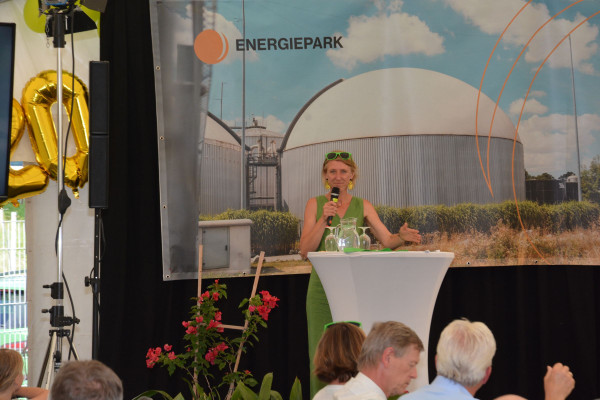 Biomethane-powered vehicles have the lowest environmental impact and the lowest overall emissions compared to all powertrain types. Images: Own photos What role will renewable gas play in the energy transition? A central role - provided you want it to. Because:
What do you expect from a new government? First and foremost: awareness! Biomethane is much more than just an energy issue. It combines energy, agriculture and waste management in a sustainable circular economy. The positive effects are enormous: reduction of energy-intensive mineral fertiliser production, sustainable soil management, security of supply, regional value creation and job security. All of this must be included in the economic analysis. As a result:
Thank you for talking to us and let's keep our fingers crossed that things will soon move forward in a positive direction. |
|