|
 |
|
 |
 |
Dear readers,
once again, another year is drawing to a close, while events in the energy world have once again come thick and fast in 2025. The days when gas supplies from Eastern Europe were taken for granted are finally over. The European Commission is driving change forward together with its Member States. This should provide a strong tailwind for hydrogen and infrastructure development, but the road ahead remains rocky.
Since 2022, RepowerEU has been pursuing the ambitious goal of quickly ending dependence on Russian gas. This change is clearly evident in Austria: by 2025, import flows have shifted significantly, with gas coming from Germany and, to some extent, Italy. Around 50% of imports are transiting to Slovakia, Hungary and Ukraine.
Nevertheless, domestic storage facilities were well filled over the summer. Storage levels are now at around 73% in mid-December, which is a good sign for security of supply for the winter. Gas consumption in 2025 has risen by around 10% compared to the previous year. This was due to greater use of gas-fired power plants to ensure a secure electricity supply and increased consumption in industry, commerce and households. Prices have now stabilised at around 30 euros/MWh. Although this is still higher than before Russia's attack on Ukraine, it is nevertheless significantly lower than a year ago.
What is happening with hydrogen? This is slowly becoming a reality as a key element of the energy transition. With the new ‘Hydrogen Offensive 2025’, announced by the BMWET in autumn, Austria wants to focus consistently on sustainable energy supply and economic power and become the hub for renewable hydrogen in Europe. This is an important and necessary step. If Austria is serious about achieving climate neutrality by 2040, it must take swift action. The EU has also recently agreed to reduce greenhouse gas emissions by 90 per cent compared to 1990 levels by 2040 and to achieve climate neutrality by 2050.
We are on the threshold of a transition to a new era: less dependence on fossil fuels, more diversity, more sustainability. With regard to industry, climate targets and future security of supply, this transition offers not only great technical opportunities, but also political and economic ones. Thus, in 2025, the ‘energy transition in the pipeline’ remains our credo.
We look forward to continuing to accompany you on this journey — with information, analyses and perspectives for a clean energy future.
"The energy transition must also be brought into the pipelines. The well-developed gas network is ready for a climate-neutral future! With a strong EGG, the existing infrastructure can be used optimally, and the supply can be converted step by step to renewable gases – efficiently, safely and cost-effectively."
Bernhard Painz
We wish you a Merry Christmas, happy holidays and a Happy New Year. Stay healthy and enjoy this very special time of the year.
Yours sincerely,
AGGM
|
|
|
|
Important news
|
|
|
Good to know
|
|
|
AGGM in dialogue with the market
|
|
|
Important News
|
|
|
LTiP data query 2026 – basis for H2-Roadmap 2026
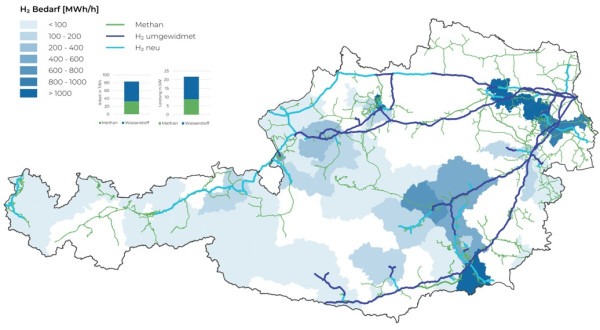
The process for Long-term and integrated Planning 2026 (LTiP 26) has begun and forms the basis for upcoming infrastructure planning. As part of this, we are working on H₂-Roadmap 3.0 to actively shape the future of hydrogen infrastructure in Austria. It is intended to map demand clusters in Austria even more precisely and provide an even better overview of the potential hydrogen supply in Austria. In doing so, we also want to send a strong signal from the energy and industrial sectors to politicians about the need for an Austria-wide hydrogen infrastructure. Austria's position as a business location and the decarbonisation of industry depend on it.
We will start the demand survey in mid-January 2026 and look forward to your active support!
|
|
 |
|
ElWG adopted – implications for the gas industry
The adoption of the Electricity Industry Act (ElWG) has brought about significant changes for the Austrian electricity market. This has been reported on extensively in recent days, and we will deliberately refrain from going into further detail about the electricity market here.
|
|
|
Good to know
|
|
|
|
|
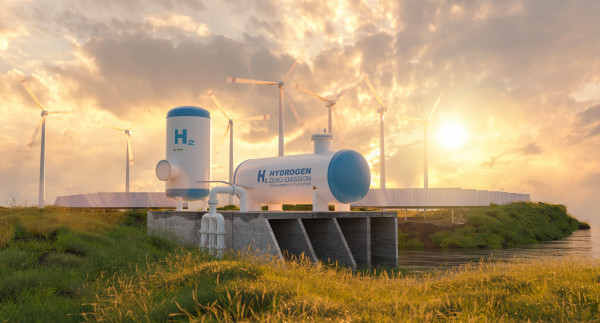
Hydrogen storage: Key to security of supply and climate neutrality in Austria
In the course of the energy transition, hydrogen is becoming a key energy source for industry, energy supply and system stability. Storage plays a crucial role in ensuring that it is available and economically viable all year round.
|
|
|
|
|
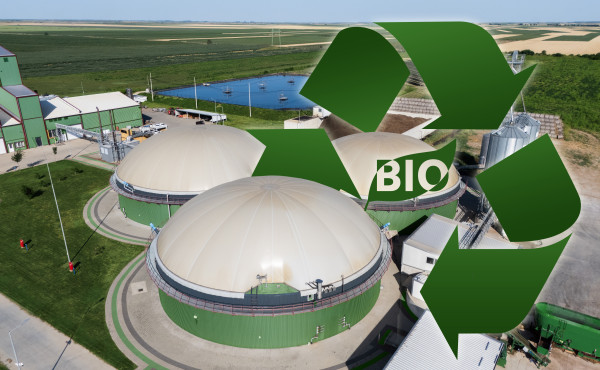
The alternative to natural gas – first biomethane feed-in in Burgenland
Biomethane can be an important climate-friendly alternative in the future supply of gas, as renewable raw materials, manure and municipal and industrial organic waste are used for its production.
|
|
|

|
|
AGGM-Roadshow
Under the motto ‘Stay in touch with gas’, we launched an ‘AGGM Roadshow’ this autumn to engage in personal dialogue with all distribution network operators in Austria. The discussions focused on security of supply, network planning and operation, our services such as calorific value reconstruction and, of course, the energy transition.
|
|
|
Data-Chart of the Quartal
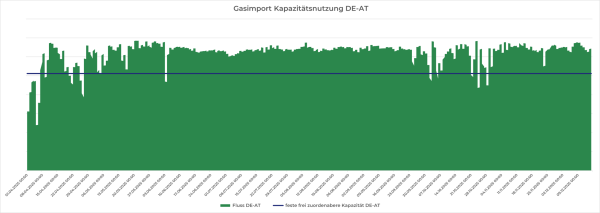
Since April 2025, import capacities from Germany have been utilised almost continuously beyond fixed capacities (FZK). This is made possible by the provision of interruptible transport capacities. The potential for additional imports from Germany is therefore low. The increase in import capacity from Germany with the WAG Part Loop 1 will improve this situation to a certain extent.
https://platform.aggm.at/portal/visualisation/ts-publication?fav=QiP
|
|
|
AGGM in dialogue with the market
|
|
|

|
|
A not entirely genuine interview with the traditional Christkind
We want to call it Chr-AI-stkind here, and it is a 100% AI-generated conversation with artificial intelligence instead of heavenly inspiration, but with an astonishingly realistic view of energy policy and infrastructure.
|
|
|
©2026 AGGM Austrian Gas Grid Management AG
|
|
|
|
|